Ultrahuman
/
2026
Bringing clinical migraine therapy into a biomarker-driven wellness product
Translating an FDA-approved protocol into a daily, habit-forming experience powered by real-time data
Product Design
/
0 → 1 feature
Led end-to-end design. Translated a clinical protocol into a scalable product experience, defining UX, systems, and visual language.
/
Challenge
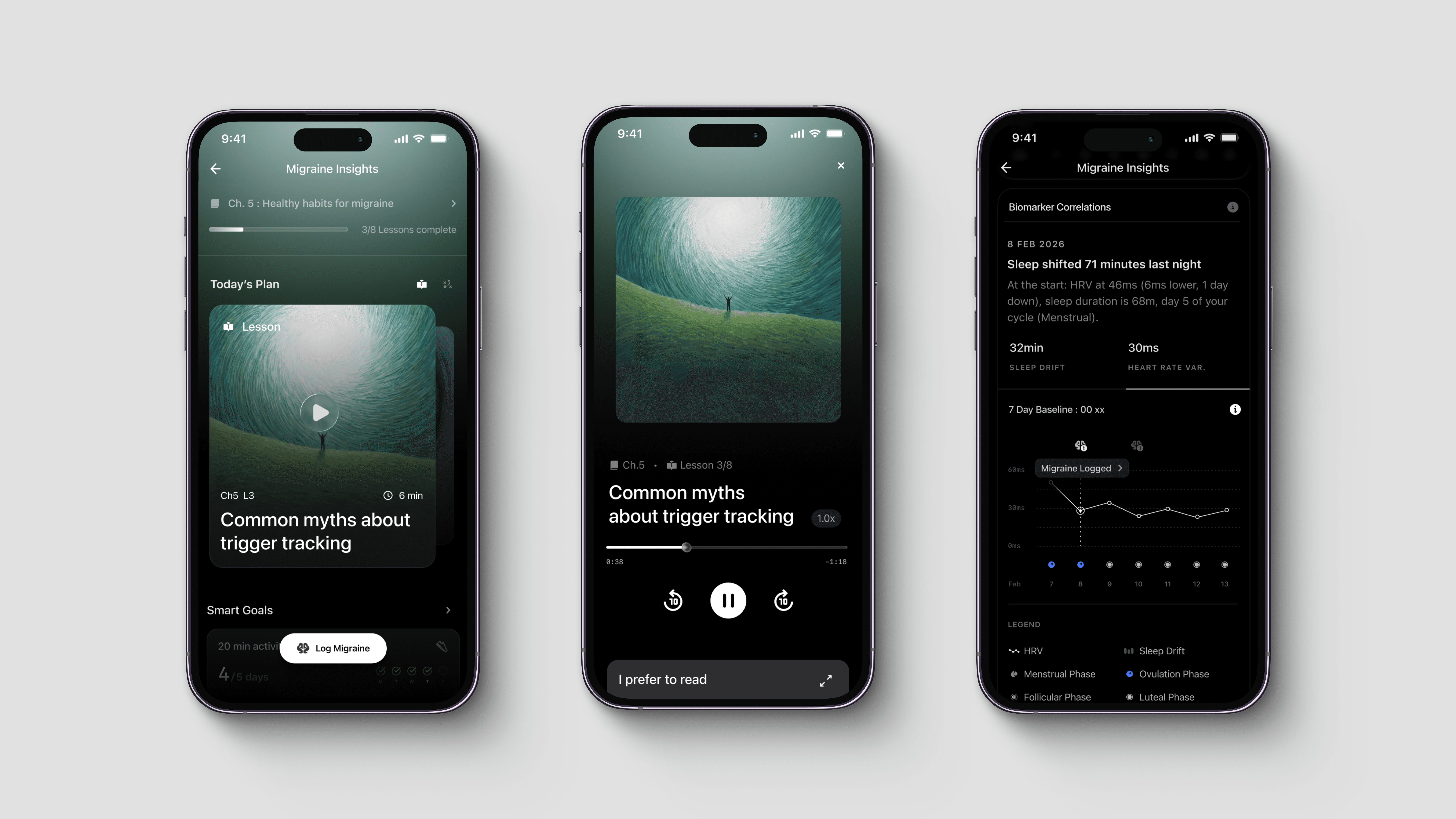
We partnered with Click Therapeutics to bring an FDA-approved migraine therapy into Ultrahuman.
Their protocol was designed for a 12-week clinical setting. Ultrahuman is a daily-use wellness product.
The challenge was to compress and adapt this into an 8-week experience that users could realistically follow every day. It had to feel lightweight, supportive, and integrated with biomarker data, without losing clinical intent.
/
Approach
We restructured the protocol into a daily system.
Each day had a clear scope. A lesson, a skill, and a goal. No bingeing. No overload.
We layered this onto Ultrahuman’s biomarker system to personalize goals and insights. The experience was designed to be calm, low-friction, and supportive.
To scale content, we also built an AI-assisted pipeline to generate and maintain a consistent visual system across ~60 assets.
Chapter 1: Structuring a daily therapeutic experience
Reducing the protocol into daily actions
The original 12-week CBT-based program was compressed into 8 weeks.
We broke it into a daily system. Each day unlocks one lesson, with skills introduced contextually across days.
Users cannot binge content. The pacing is intentional, designed to build consistency.
Designing for low-effort consumption
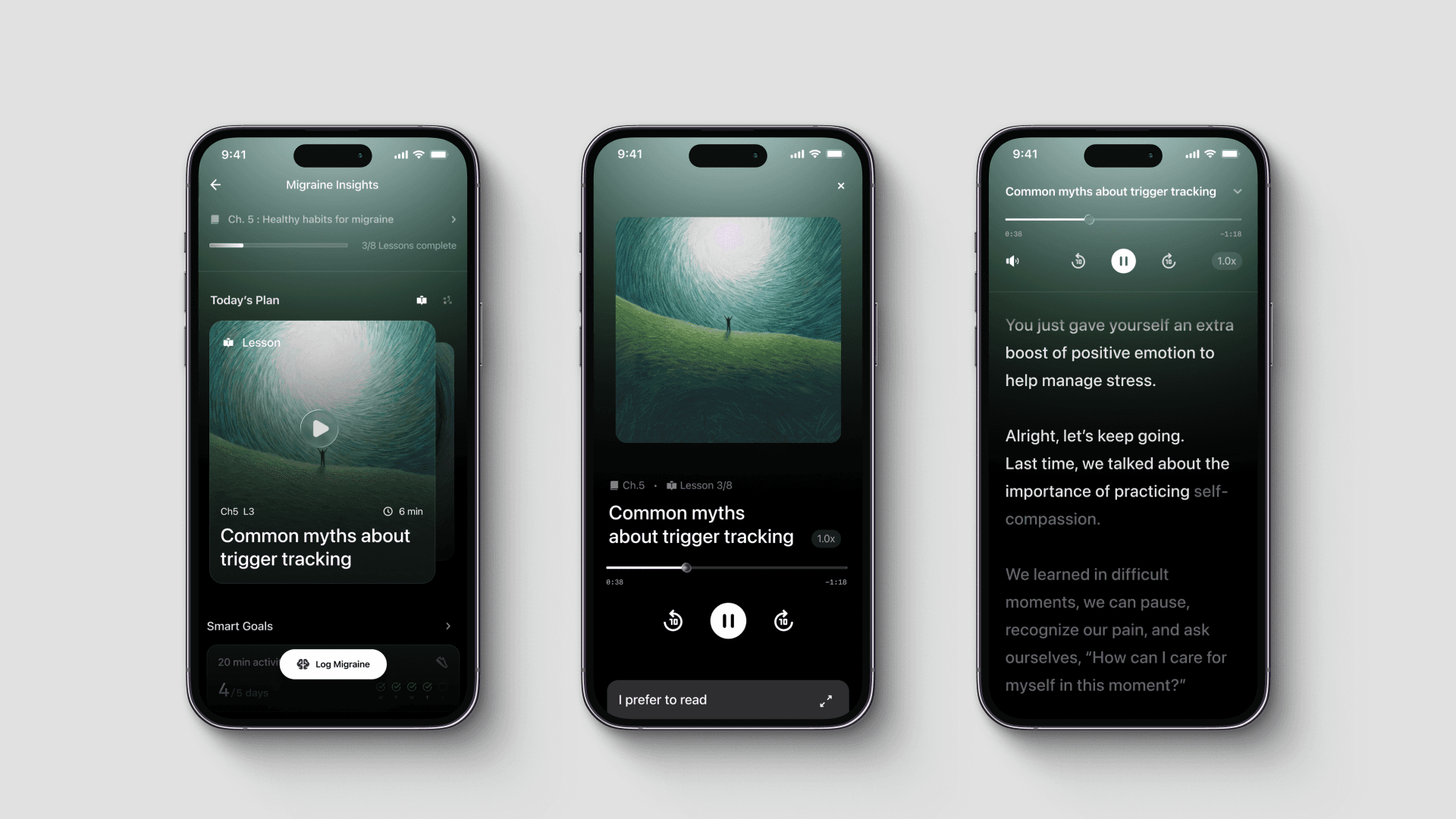
Migraines limit screen usage.
We designed a dual-mode player where users can switch between audio and text seamlessly. The experience prioritizes listening, with structured text as a fallback.
Content includes pauses, highlights, and guided formatting to reduce strain.
Reinforcing consistency through streaks
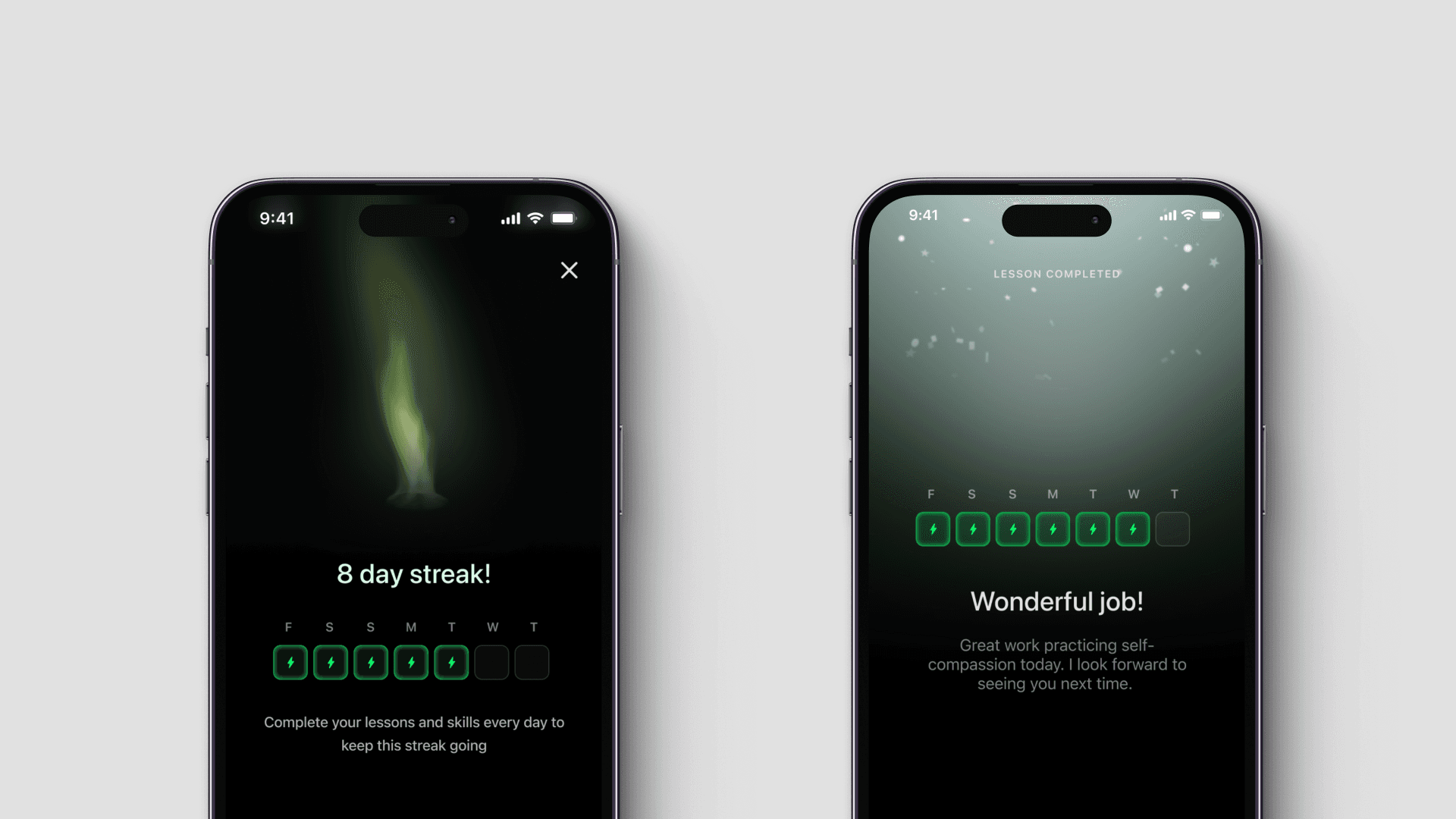
Showing up daily is critical.
We introduced streaks at entry and completion. Users always know where they are and what they’re building towards.
Celebration is lightweight, focused on continuity rather than pressure.
Chapter 2: Designing behaviour change through smart goals
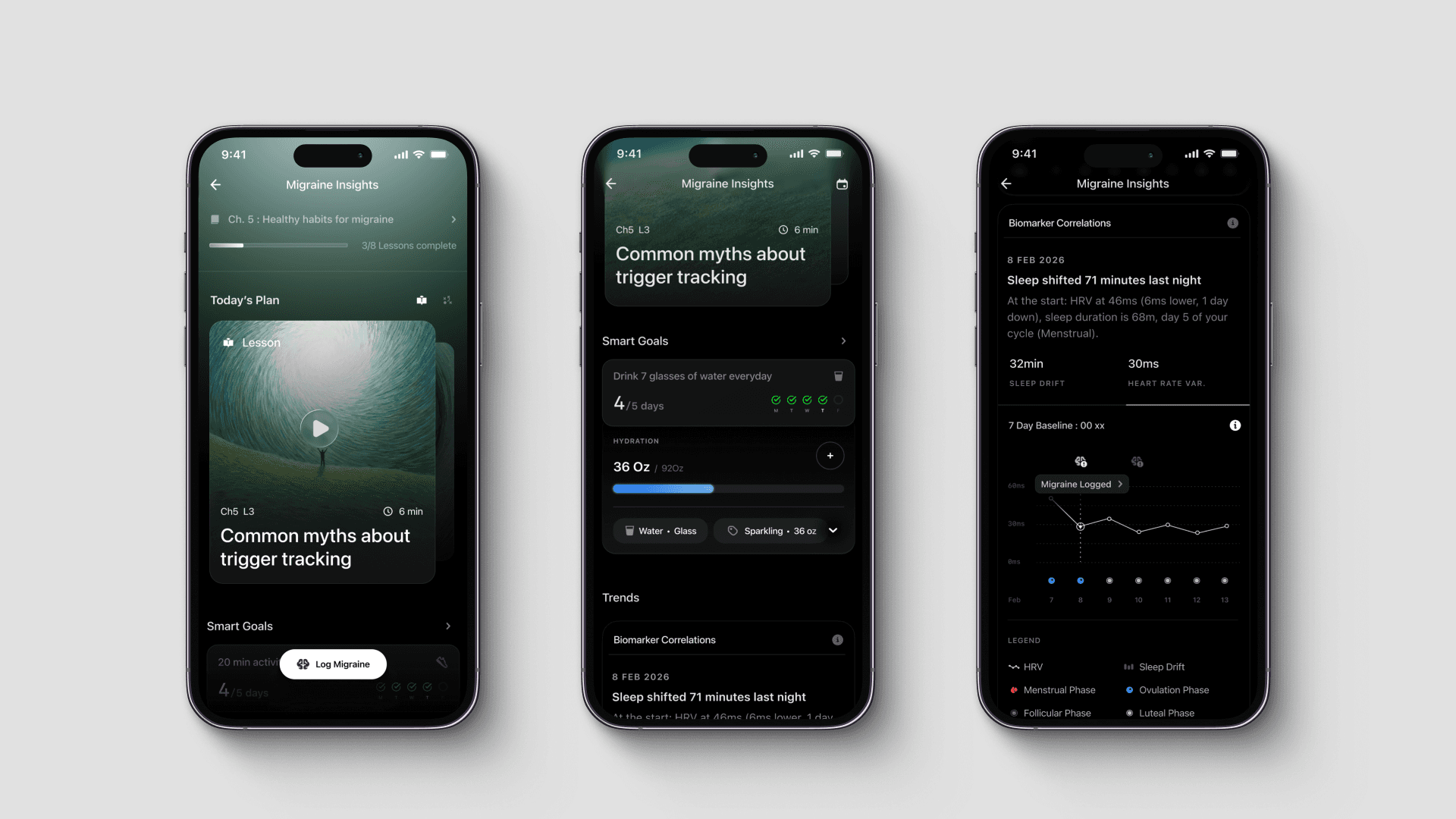
Turning biomarker data into daily goals
Goals are introduced after initial learning phases.
Using biomarker data, the system recommends one focused goal across sleep, movement, or hydration.
Each goal is framed as a short challenge, adapting based on user performance over time.
Handling progression, failure, and edge cases
Behavior change is non-linear.
We designed states to handle success, failure, repetition, and fallback. Every outcome reinforces effort, not just results.
Fallback goals simplify the task while maintaining continuity.
Evolving goals through stacking
Once a goal is stabilized, new goals are layered on top.
Stacking allows users to build multiple habits progressively, without resetting earlier behaviors.
Chapter 3: Biomarkers and correlations
Connecting migraines to physiological patterns
Migraines correlate with cyclical biomarker changes.
We surfaced patterns across sleep drift, HRV, and recovery, helping users connect subjective experiences with objective data.
Chapter 4: Structuring the experience across surfaces
Guiding the next best action
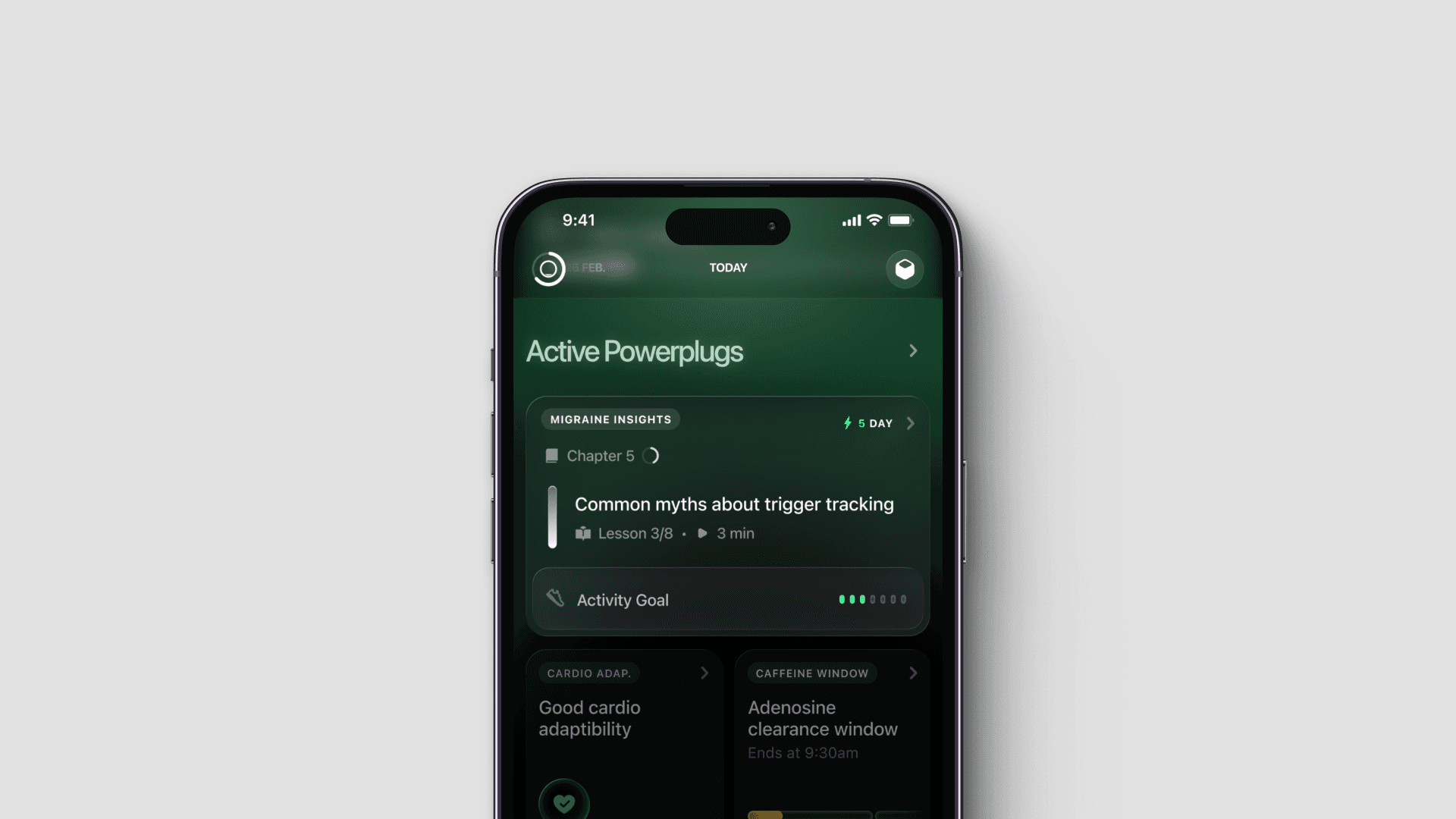
The experience is anchored around what the user should do next.
The home card is not a summary. It surfaces the most immediate action. Continue a lesson, complete a skill, or follow a goal.
Regardless of state, the intent is clarity. What should I do right now?
Clicking always leads to the detailed view.
Designing for progression over time
The system evolves as the user progresses.
Early stages focus on lessons. Midway introduces goals. Later stages combine multiple behaviors.
Different states are communicated over time, without changing the core structure.
Integrating logging and utilities
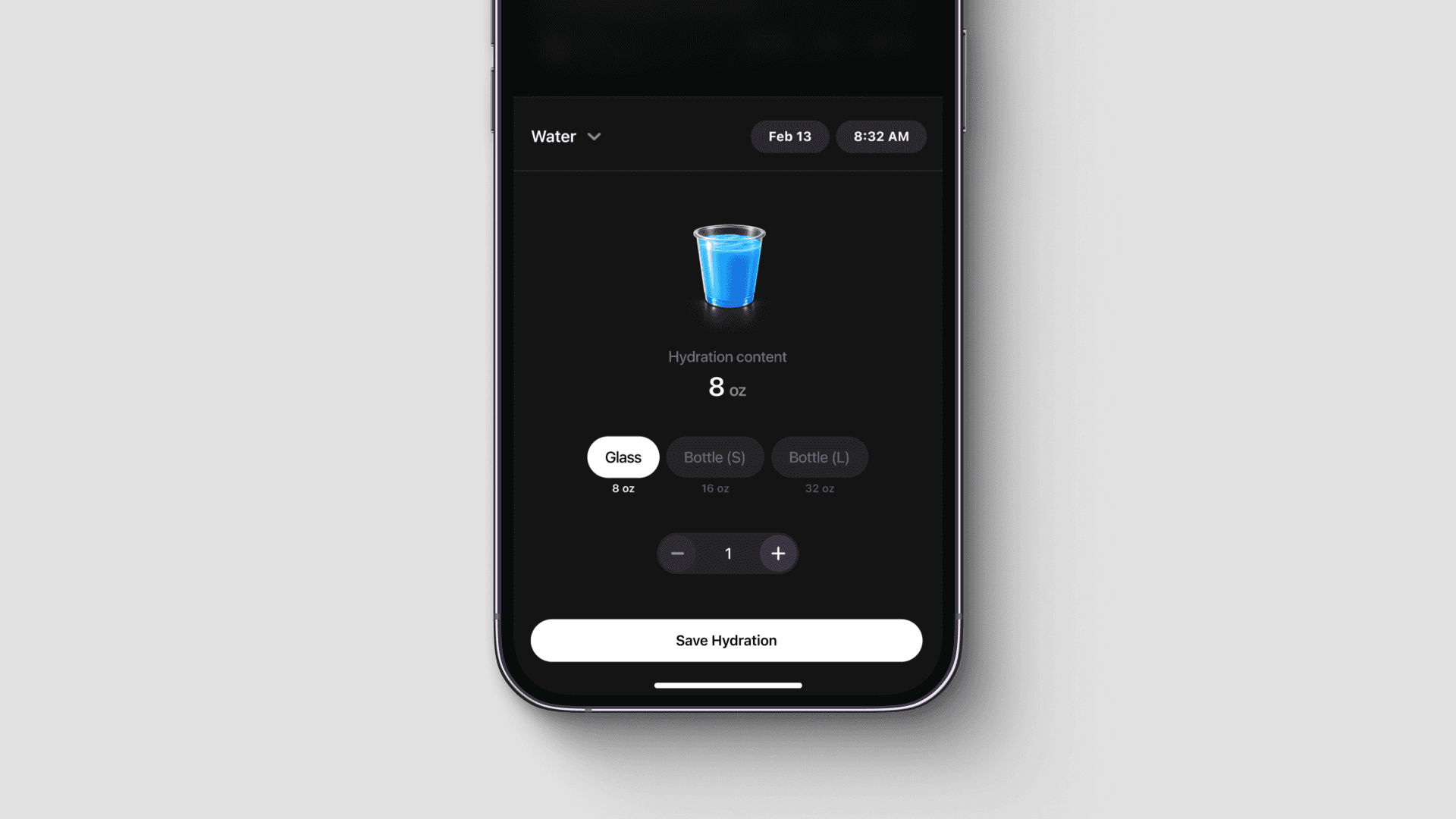
The experience includes lightweight logging systems.
Users can log migraines with key attributes like intensity and duration. Hydration tracking was introduced to support goals.
A persistent CTA ensures logging is always accessible.
Chapter 5: Visual system for a sensitive context
Designing for comfort and emotional tone
The experience needed to feel calm and non-triggering.
We reduced contrast, softened whites, and used muted greens and blues. Motion was minimized.
The visual system supports users in a vulnerable state.
Building a scalable visual system
Each lesson and skill required a distinct visual.
We created a consistent style centered around a character moving toward light. Calm, reflective, and hopeful.
To scale, we built an AI-assisted pipeline using structured prompts and APIs to generate and organize ~60 visuals efficiently.
/
conclusion
This Powerplug translated a clinical protocol into a daily, usable product.
It created a structured system that users could realistically follow, while staying grounded in biomarker data.
It also introduced new primitives into Ultrahuman. Daily progression, adaptive goals, and biomarker-linked insights that extend beyond migraines.
The key decision was to simplify without diluting.
By focusing on what users need to do today, the system becomes easier to follow, more engaging, and more effective at driving behaviour change.
The same system was later reused as a template to build additional PowerPlugs, proving its scalability beyond migraines.